Foot Health for Swimmers: Wet Feet and Hidden Risks
Swimming is one of the kindest forms of exercise you can do for your body.
It’s low-impact, full-body, easy on the joints, and genuinely enjoyable in a way that a lot of exercise isn’t. For many people it’s a lifelong activity and definitely something you can keep doing comfortably well into older age.
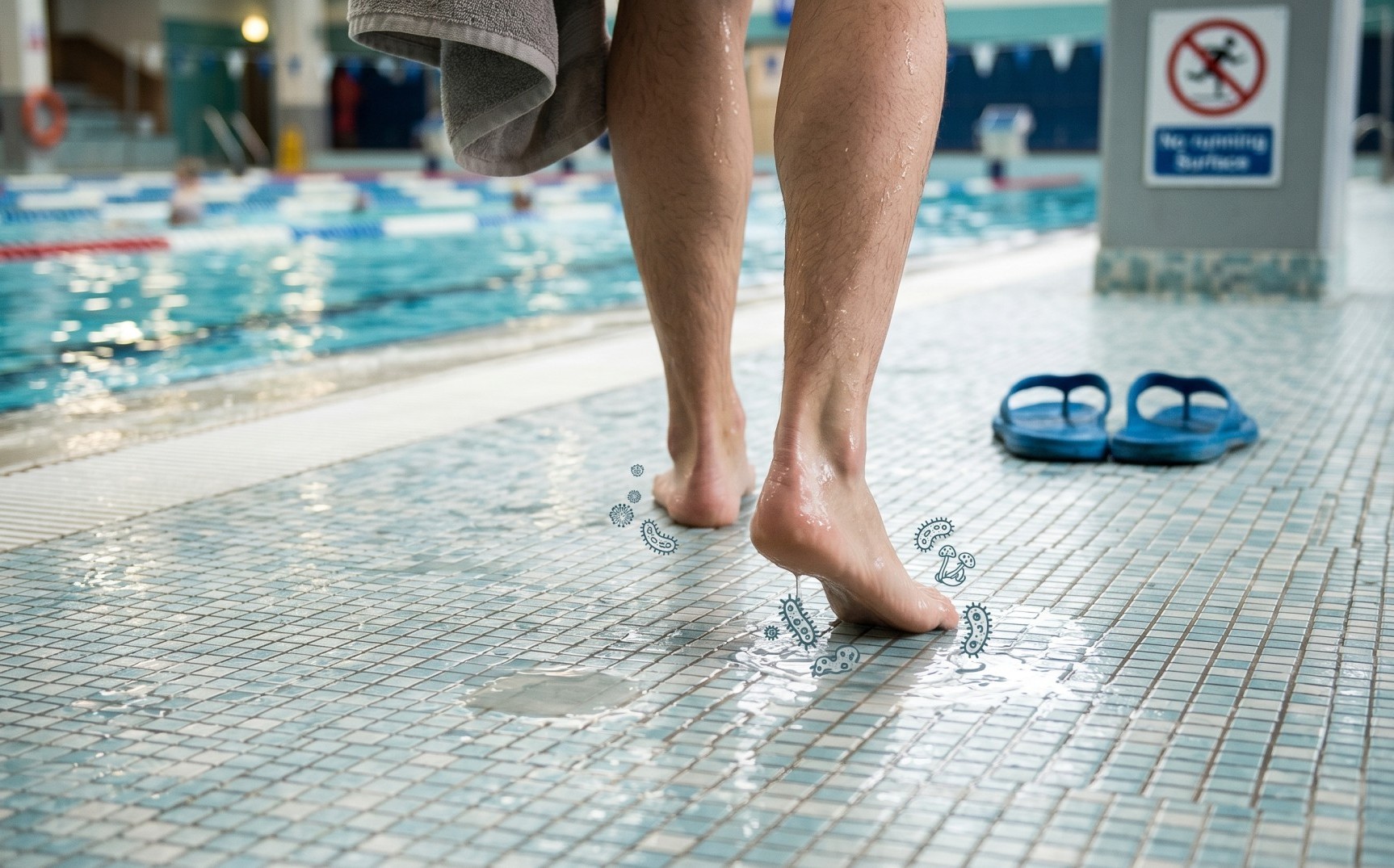
But for all its gentleness on the joints, swimming comes with its own set of foot health risks that don’t get talked about nearly enough. Wet pool decks, communal change rooms, prolonged skin exposure to water and chemicals, and hours spent barefoot in shared spaces all create conditions that the feet don’t always love.
The good news is that most swimmer-related foot problems are very preventable once you know what to look out for. Here’s what to be aware of.
The pool environment and your feet
Public pools are warm, wet, and heavily trafficked. From a foot health perspective, that’s a combination worth paying attention to.
The warm, damp surfaces around pools – the decks, the change room floors, the shower areas – are ideal environments for fungi and certain viruses to survive and spread. Every barefoot step in these areas is a potential exposure. This isn’t a reason to panic or avoid swimming; it’s just a reason to be a little thoughtful about how you move through those spaces.
Pool water itself is also worth considering. Chlorine and other pool chemicals are generally effective at controlling bacteria, but they’re not particularly kind to skin over time. Prolonged and repeated exposure can strip the skin’s natural oils, leading to dryness, cracking, and a compromised skin barrier – which in turn makes it easier for infections to take hold.
Tinea pedis (athlete’s foot)
Athlete’s foot is probably the most well-known swimmer’s foot complaint, and for good reason. Pool environments are among the most common places it’s picked up.
It’s caused by a fungal infection that thrives in exactly the conditions a pool deck provides: warm, wet, and frequently walked on by many different feet.
The infection typically starts between the toes, where moisture lingers longest. It causes itching, scaling, redness, and sometimes a burning or stinging sensation. If left untreated it can spread across the sole of the foot and, in some cases, to the toenails, where it becomes considerably more stubborn to treat. This spread to the nails is known as a fungal nail infection, which has its own set of challenges.
Prevention is straightforward:
Wear thongs or pool sandals on pool decks, in change rooms, and in shower areas – and try to keep them on until you’re back on dry ground
Dry your feet thoroughly after swimming, paying particular attention to the spaces between the toes
Change into clean, dry socks as soon as possible after drying off
If you swim regularly, a light application of antifungal powder or spray to the feet a few times a week can act as a good preventive measure
If you do develop athlete’s foot, antifungal treatments are available over the counter and are generally effective when used consistently and for the full recommended duration. If symptoms aren’t settling after a couple of weeks of treatment, it’s worth seeing a podiatrist – particularly if there’s any sign the infection has spread to the nails. These kinds of skin conditions of the foot are something we assess and treat regularly.
Fungal nail infections (onychomycosis)
Fungal nail infections are a slower, more persistent version of the same problem. The same fungi responsible for athlete’s foot can invade the toenail itself, causing the nail to thicken, discolour, become brittle, and sometimes separate from the nail bed.
They’re common in swimmers for all the same reasons – the repeated exposure to wet communal surfaces – and to top it off, they’re significantly more difficult to treat once established. Toenails grow slowly, and antifungal medications need time to reach and clear the infection through the full length of the nail. Treatment can take months.
Catching a fungal nail infection early, when the nail is just starting to look a little dull or slightly thickened at the edge, gives you a much better chance of clearing it efficiently. If you’re a regular swimmer, keep an eye on your nails and don’t dismiss early changes as purely cosmetic. A podiatrist can confirm whether it’s a fungal infection and discuss the most appropriate treatment, including K-laser therapy if topical treatments haven’t been effective.
Plantar warts (verrucae)
Plantar warts are caused by certain strains of the human papillomavirus (HPV) and are picked up through direct contact with contaminated surfaces like pool decks and change room floors. You can read more about them in our post on warts and your feet.
They appear on the sole of the foot, usually as a small, firm lesion with a rough surface. They can sometimes have tiny black dots visible in the centre – these are actually small blood vessels within the wart. Unlike warts on other parts of the body, plantar warts are pushed inward by body weight, which can make them quite uncomfortable to walk on, particularly when they develop under a pressure point.
Not everyone who is exposed to HPV develops a wart – it depends on the state of the skin and the immune system at the time of contact. Small cuts or abrasions on the sole, or skin that has been softened by prolonged water exposure, create an easier entry point.
Wearing pool sandals reduces risk significantly. If a wart does develop, early treatment is more straightforward than waiting until it’s large or spreading. Treatment options include topical treatments, debridement, and K-laser therapy – a podiatrist can advise on what’s most appropriate.
Dry and cracked skin
Repeated exposure to pool water, especially chlorinated water, gradually strips the skin of its natural moisture. Over time, this can leave the skin on the feet dry, rough, and prone to cracking – particularly around the heels where the skin is already thicker and less flexible.
Cracked heels that deepen can become genuinely painful and occasionally prone to infection when the skin splits completely. For people who swim several times a week, this is a slow process that’s easy to overlook until it becomes uncomfortable. If things have progressed beyond what regular moisturising can manage, a general footcare appointment can help clear built-up hard skin and get things back to a comfortable baseline.
The solution is consistent moisturising. Applying a good foot cream or urea-based moisturiser after each swim, once the feet are fully dry, goes a long way toward keeping skin supple and resilient. It’s one of those habits that takes thirty seconds and makes a real difference over time.
Maceration between the toes
Maceration is the term for what happens to skin that stays wet for too long – the skin becomes soft, white, and wrinkled, and loses much of its natural protective function. The skin between the toes is particularly vulnerable because moisture collects there and is slow to evaporate.
Macerated skin is more fragile, more prone to tearing, and provides much less of a barrier against fungal and bacterial entry. For regular swimmers who aren’t drying between the toes carefully after each session, maceration can become a persistent issue that quietly sets the scene for infection.
Thorough drying between the toes after every swim is the key preventive step. If the skin between your toes is consistently soft, white, or breaking down, it falls into the category of skin conditions worth having assessed sooner rather than later.
Overuse injuries in competitive or regular swimmers
Swimming is often recommended as a low-impact alternative for people with foot and lower limb injuries, and rightly so – the water reduces the load through the joints considerably. But competitive swimmers and those who train frequently can still develop overuse injuries, particularly in the feet and ankles.
The repetitive kicking motion in freestyle and butterfly puts significant demand on the ankle and the top of the foot. Flexor tendon irritation, extensor tendon inflammation, and even stress responses in the metatarsals can develop in swimmers who dramatically increase their training load – similar in nature to the muscle and tendon conditions we see in other athletes.
Fins and flippers, while great training tools, place an additional load on the forefoot and can contribute to discomfort if used excessively or in the wrong size. If foot or ankle pain is developing alongside increased swim training, it’s worth having it assessed rather than assuming it will settle on its own. A video walking and running assessment can help identify any biomechanical factors worth addressing.
Swimming after foot treatment
A common question in clinic is whether it’s safe to keep swimming while undergoing treatment for a foot condition. The answer depends on the condition and the treatment, but there are a few general principles:
Wart treatment: swimming is generally fine, but cover the treated area with a waterproof dressing to protect it and reduce the small risk of spreading the virus in a pool environment
Fungal infections: continuing to swim is usually fine, but be particularly diligent about the preventive measures above, and avoid going barefoot in communal areas while the infection is active
Open skin, blisters, or wounds: avoid swimming until the skin is closed and healing well, both to protect the wound from contamination and to be considerate of other pool users
Post-surgical or post-procedural: always follow your podiatrist’s specific guidance on when it’s safe to return to the pool
Simple habits that protect swimmer’s feet
Most of the risks above are very manageable with a consistent routine. Here’s a simple checklist for regular swimmers:
Always wear thongs or pool sandals on wet communal surfaces – pool decks, showers, change rooms
Dry feet thoroughly after every swim, especially between the toes
Moisturise after drying to counteract the drying effects of pool chemicals
Keep toenails trimmed straight across to reduce the risk of ingrown nails
Check feet regularly for early signs of fungal infection, warts, or skin changes
Use antifungal powder or spray if you swim frequently, particularly in warmer months
Don’t ignore foot or ankle pain that develops alongside increased training
How Hurst Podiatry can help
Whether you swim for fitness, for competition, or simply because you love it, keeping your feet in good shape means you can keep doing what you enjoy without interruption.
If you’ve noticed any changes to your skin or nails, developed a wart or fungal infection, or are experiencing foot pain that’s interfering with your training, the team at Hurst Podiatry is here to help sort it out quickly and get you back in the water.Book an appointment with us today – there’s no need to tread water on a foot problem when help is close by.